Sign up for the Slatest to get the most insightful analysis, criticism, and advice out there, delivered to your inbox daily.
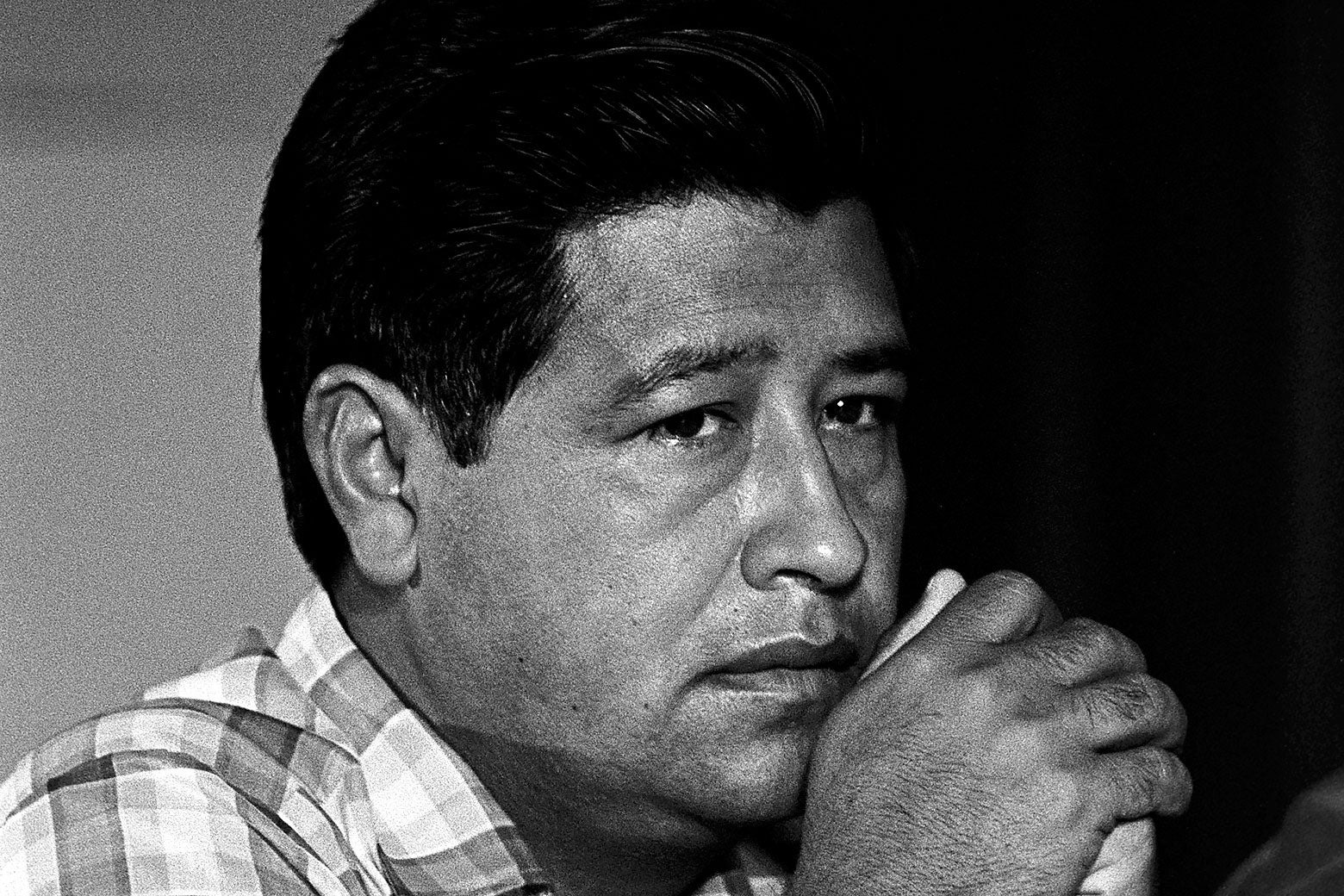
Cesar Chavez was a devoted workers’ rights advocate, a civil rights icon who improved the lives of millions of farmworkers through social activism and political organizing. According to allegations published Wednesday in the New York Times and on Medium, he was also a serial rapist and child abuser.
Multiple women have come forward with stories of being groomed as children and molested as young teens by Chavez. They say he used his position of reverence among labor leaders, Chicanos, and leftist activists to lure them in and earn their parents’ trust—some alleged victims were children of his associates—then told them to keep quiet about the abuse lest other girls get jealous. The accusers include Dolores Huerta, Chavez’s longtime collaborator and a civil rights luminary in her own right, who said in a statement he pressured her into sex one time and forced her into it another.
The allegations have rocked the labor movement and left-leaning political circles, most of which regard Chavez as a national hero. But the claims did not come as a shock to everyone: One alleged survivor posted about Chavez’s abuse a decade ago in a private Facebook group for Chavez supporters, and members of the United Farm Workers, the union he and Huerta co-founded, discussed another woman’s allegations in internal emails. Still, the women’s stories were kept quiet, allowing Chavez to enjoy a sterling reputation that has persisted since his death in 1993.
The two main accusers in the Times’ reporting say they were 12 and 13 years old when Chavez began molesting them. This detail makes the report all the more sickening, especially in this moment of reckoning around the Epstein files. The uncovering of child sexual abuse in such disparate circles drives home how pervasive it can be, and how easily it is ignored or excused when the perpetrators are men of power and influence.
From the outside, Epstein and Chavez could not have been more different. Jeffrey Epstein was a finance guy and unabashed sleazeball who relished conspicuous consumption. He owned an entire island, flew powerful men around on his private jet, and was so open about his sexual obsession with girls and young women that his associates couldn’t stop joshing him about it.
Sure, Epstein hobnobbed with prominent scientists and philanthropists. He talked a big game about improving the world through innovation and sought to launder his reputation through donations to Jewish organizations, politicians, and universities. But he was never known as a beacon of integrity. When he was charged with sex crimes against teenage girls in 2007, and when evidence of his far-reaching sex-trafficking network became public upon his federal indictment a decade later, any public surprise came from the extent of the abuse and the implication of so many A-list names, not because Epstein was known as a particularly justice-oriented guy.
Chavez, by contrast, was a humble farmworker who led a momentous social movement that changed the country for the better, inspiring generations of activists and labor organizers. His politics were not perfect: He had an authoritarian, ethnocentric streak and advocated draconian anti-immigrant policies. But he fought tirelessly for people who were being mistreated and convinced them of their power to demand higher wages and a better life. All the while, he was allegedly raping children and women in communities that trusted him. His commitment to the fight for human dignity did not extend to them. And Chavez didn’t abuse in spite of his achievements for workers and civil rights; those achievements appear to have given him the cover he needed to mask his abuse.
There is something acutely dispiriting about the fact that two men who led such different lives were both reportedly child molesters who thought nothing of inflicting lifelong trauma on their victims. All the old, tired explanations hold true: Power, money, and fame corrupt; every fave is problematic, or at least fallible; child sexual abuse is far more common than most people think. But the Chavez reporting still comes as a demoralizing reminder, in the midst of the Epstein files fallout, that people in every corner of society, no matter how virtuous they may seem, are capable of committing unimaginable cruelty and justifying it to themselves.
History is chock-full of human rights advocates whose robust analysis of power and justice stopped precisely when they stepped over the threshold into their own home, office, or local middle school. Elie Wiesel reportedly grabbed a teenager’s ass at a Jewish fundraising dinner. Nelson Mandela subjected his first wife to repeated infidelities and alleged physical abuse. Martin Luther King Jr. was a philanderer who, documents suggest, may have egged on a rapist during a sexual assault he witnessed. Mahatma Gandhi slept naked with his teenage grandnieces to test his own celibate willpower. There are innumerable Democratic men—Andrew Cuomo, Bill Clinton, John Conyers, Eric Schneiderman, Anthony Weiner, countless state legislators—who painted themselves as allies to women in the political sphere while harassing, abusing, and mistreating them in their own lives.
Some supporters might qualify their opprobrium with the notion that it was acceptable, or even expected, for men to treat women like sexual playthings in bygone eras. But progressive activists are, by definition, intelligent and imaginative enough to challenge social norms in pursuit of a better world. Cheating on one’s spouse is a recognized offense as old as marriage itself. Rape was illegal when Chavez allegedly assaulted Huerta, as was child sexual abuse. And the 1960s and ’70s, when much of Chavez’s reported abuse took place, was the heyday of “the personal is political,” an essential liberatory framework with which he was surely familiar.
In the statement she posted on Medium on Wednesday, Huerta wrote, “For the last 60 years I have kept a secret because I believed that exposing the truth would hurt the farmworker movement I have spent my entire life fighting for.” Chavez apparently felt no such concern about undermining the cause to which he devoted his life—or perhaps he was so confident in his position of power, so sure that no one would dare challenge him, that the possibility of negative consequences never occurred to him. The burden of protecting social movements from the abusive men within them has always fallen to girls and women, who are then implicated in any future harm by their silence. That is the vile dilemma Chavez imposed on his alleged victims: delegitimize the world-changing activism that gives a life meaning, or keep quiet and leave others vulnerable to abuse.