Sign up for the Slatest to get the most insightful analysis, criticism, and advice out there, delivered to your inbox daily.
Amnesty International became the first major human rights organization last week to officially accuse Israel of genocide in Gaza. Its 296-page report presents evidence that includes accounts of mass civilian killings and dire living conditions in the densely populated and blockaded Gaza Strip, which, Amnesty argues, are calculated to bring about the destruction of Palestinian life. As the report put it, “Israel committed and is committing genocide against Palestinians in Gaza.”
Israel has strongly denied the accusations, saying they are “based on lies” and accusing the report of ignoring Hamas’ violations of international law. With other groups, including the United Nations and Human Rights Watch, raising alarms about Israel’s military actions, and the International Criminal Court issuing an arrest warrant for Israel’s prime minister, the report arrives at a moment of heightened international debate over the legal and ethical dimensions of the war.
To explain the findings and implications of the report, I spoke with Nadia Daar, chief strategy and impact officer at Amnesty International USA, who oversees U.S.–based advocacy and communications for the group. In our conversation, she detailed how the investigation was conducted and responded to the denunciations in Israel, including a disavowal from some in Amnesty’s own Israel-based outfit.
Slate: Can you walk me through your approach to creating this report?
Nadia Daar: This is an incredibly in-depth investigation. It is the latest of over a dozen reports from Amnesty since October 2023, and the evidence for this report has partially come from that work. In addition, we have done over 200 interviews, used satellite imagery, verification using geolocating, and consolidated data collected from U.N. agencies and other humanitarian organizations operating on the ground. We then examined all of our evidence against the international crime of genocide, established in the Genocide Convention, a legal standard established in 1948. And we have concluded that the Israeli government has committed and is continuing to commit genocide against Palestinians in Gaza. And this must urgently be put to a stop.
What specific cases most contributed to your conclusions?
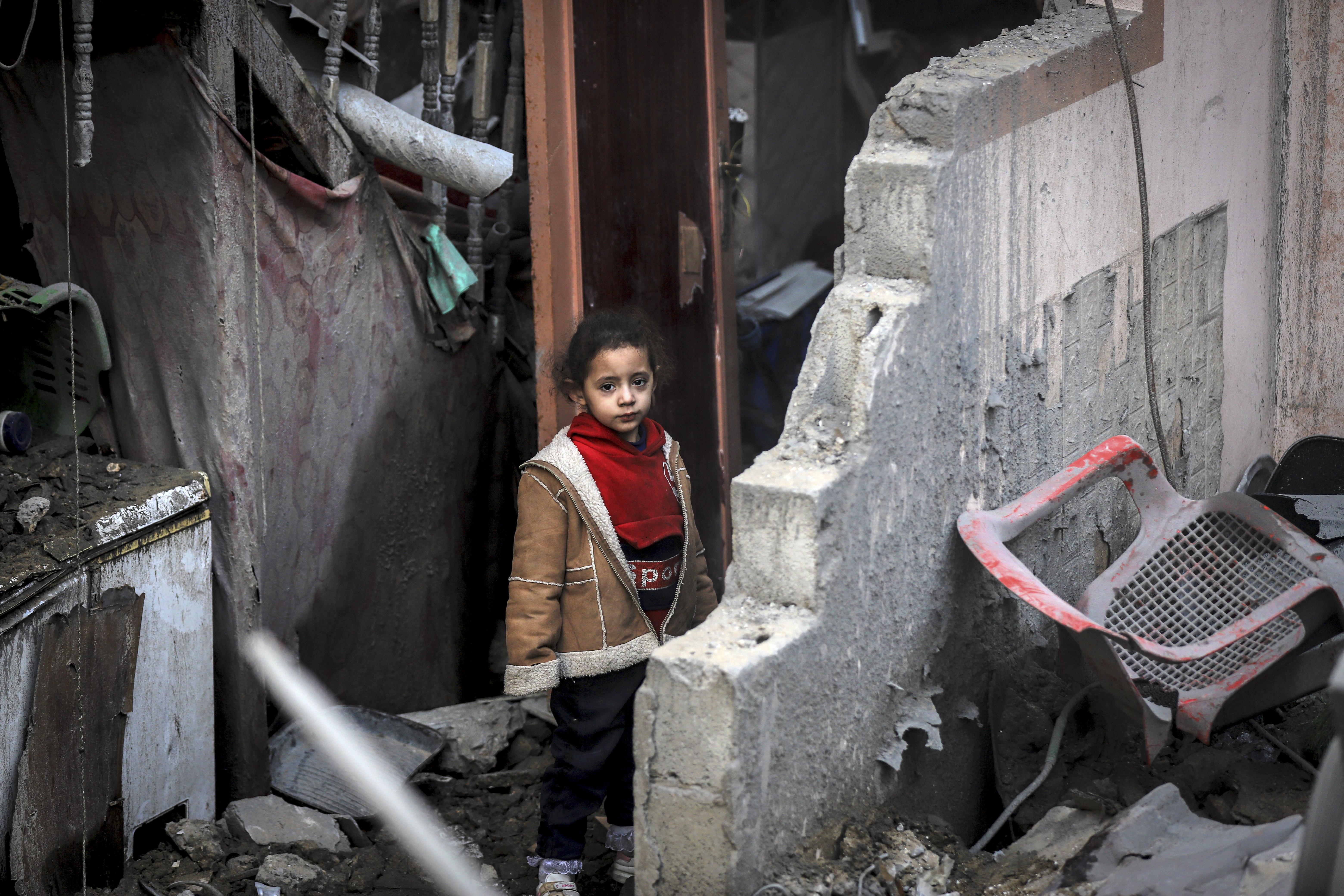
We have documented in detail 15 airstrikes that took place between Oct. 7, 2023 and April 20, 2024. Across them, at least 334 civilians were killed, including 141 children and hundreds of others wounded. We uncovered evidence of weapons of U.S. origin used in some of those attacks. In one illustrative case, in April, an Israeli airstrike destroyed a family house in the Al-Janina neighborhood in eastern Rafah, killing three generations of Palestinians, including 16 children while they were sleeping. Over 42,000 Palestinians were killed since October, over 13,000 of them children, the highest number of journalists and U.N. workers killed in any modern conflict. And what we have described in our investigations of indiscriminate attacks is just a fraction of the destruction.
Especially with so many journalists and workers killed, what logistical challenges did you face in reaching people, verifying their stories, and deciding what evidence could be included in the report?
We have a field-worker in Gaza who has been an incredible asset in enabling us to do that level of reliable research in Gaza. We also have a crisis-evidence lab and have conducted over 200 interviews. But the obstruction of the freedom of the press, not allowing media organizations in the Gaza Strip, and the devastating number of U.N. workers, humanitarian workers, and local journalists who have also been killed in Gaza have made this work extremely dangerous.
Producing this report has been complex and challenging, but it has not been impossible for us to develop this research. And we feel very strongly about the findings. And we hope that people and policymakers in particular will take these findings seriously.
The report cites statements from 22 senior Israeli officials as evidence of genocidal intent. But Israel argues that these statements aren’t directly tied to policies.
We have established through our investigation the intent to destroy, a key threshold for the genocide standard, by looking not only at genocidal statements. We analyzed over 100 statements by Israeli government and military officials—not just the phrases shared widely in social media—who have authority to make decisions on the conduct of the military, and then looked at how those statements have been repeated and interpreted by Israeli soldiers on the ground in Gaza, identifying how those statements translated onto the battlefield, which is vital. But statements are not the only way in which we established Israel’s specific intent to physically destroy the Palestinians in Gaza.
Prohibited acts under the convention fall into five categories, and we found that the Israeli government is incriminated in three of them: killing members of the group, causing them serious mental and bodily harm, and deliberately inflicting on the group conditions that are calculated to bring about their destruction in whole or in part. But the point that I really want to highlight is the denial and obstruction of the delivery of aid and essential services into Gaza, which has created a deadly mixture of malnutrition, hunger, and disease. Palestinians are living in terror, not only for the threat of a bomb dropping on them every night but also for lack of medical treatment, food, and water. It’s the pattern of conduct which is critical for us to establish Israel’s intent here: repeated indiscriminate attacks, repeated displacement to unsafe and unsanitary conditions, repeated attacks on civilian infrastructure, and repeated denial and blockage of critical aid.
How do you differentiate between reckless disregard for civilian life and an intent to destroy civilian life, especially in a legal context?
We are not disregarding the fact that the Israeli government has stated military objectives in Gaza: to destroy Hamas and the safe return of hostages. Those are military objectives and military intent. But the intent to commit genocide can be demonstrated either as a means to achieve that military objective or as a stand-alone objective. In the legal standard for genocide, there can be dual intent, or it can be a means for the intended military objective.
With the Trump administration taking office soon, do you think this political shift will affect how this report is received or understood by the international community?
This is an international report, not a U.S.–specific report. Indeed, we’ve been pushing the Biden administration for the last 14 months to take the human rights violations much more seriously and to immediately stop the transfer of weapons to the Israeli government. What we hope this report will do is raise the level of urgency globally and urge the Biden administration and also the incoming Trump administration to not allow for this to continue.
We are operating in different legal contexts in every country we’re operating in. We’re the largest and oldest human rights organization. By virtue of the kind of work we do, we put out reports that are uncomfortable for many political leaders. The U.S. and Israel have ratified the Genocide Convention. The U.S. is obligated under international law to prevent and to punish for the crime of genocide. We continue to be extremely concerned to see the transfer of weapons, and, frankly, the U.S. is risking complicity in genocide by continuing to do so.
There’s an ongoing ICJ case that was initiated by South Africa over Israel’s alleged breach of its obligations under the Genocide Convention. Genocide is not included in the crimes that Israel is being charged with right now. The office of the prosecutor of the ICC must urgently consider adding genocide to its ongoing investigation of alleged crimes committed by Israeli officials, and states must do everything in their power to respect the ICC arrest warrants, including the United States.
Israeli officials have already alleged bias in this report by saying that it ignores “Hamas’ violations of international law.” They also challenged Amnesty to address Hamas’ actions, including the treatment of hostages. Will there be a report on those issues? How do you respond to that?
As an international human rights organization, it’s critical that we look at all parties when there are potential risks of violations of human rights standards. Amnesty has unequivocally condemned the violations and atrocities that were perpetrated by Hamas and other armed groups in Israel on Oct. 7, 2023, and we continue to analyze the actions of Palestinian armed groups under international humanitarian law and international criminal law. We’ve condemned the taking of civilian hostages, which is a war crime. We’ve put out a report in the press soon after Oct. 7 that demonstrated our own assessment, and have concluded that war crimes have been committed by Hamas and other Palestinian groups. But our organization’s wider investigation into the Oct. 7 attacks and its aftermath is ongoing, and that report will come out with the findings and legal analysis in the coming months.
Too often, we face “If you’re lifting up this group’s human rights, then you must not be lifting up these human rights.” Human rights are not zero-sum. Human rights are for everyone. They are universal, and we need to hold that universal standard. And that is actually the basis for Amnesty’s work.
Israel’s branch of Amnesty International responded to the report like this: “While the Israeli section of Amnesty International does not accept the accusation that Israel is committing genocide, based on the information available to us, we are concerned that serious crimes are being committed in Gaza, that must be investigated.” How do you respond to that?
It’s deeply disappointing that some members of Amnesty Israel have chosen to distance themselves from this report and from its conclusion. It’s evidence-based, impartial, ethical research. That’s at the heart of everything that Amnesty International does. That’s something that we take extremely seriously and that we pride ourselves on. This particular investigation went through extensive legal analysis and research, extensive internal review at the highest levels, and also external and international legal experts. Our organization stands by this report, this research, and its conclusion.