Sign up for the Slatest to get the most insightful analysis, criticism, and advice out there, delivered to your inbox daily.
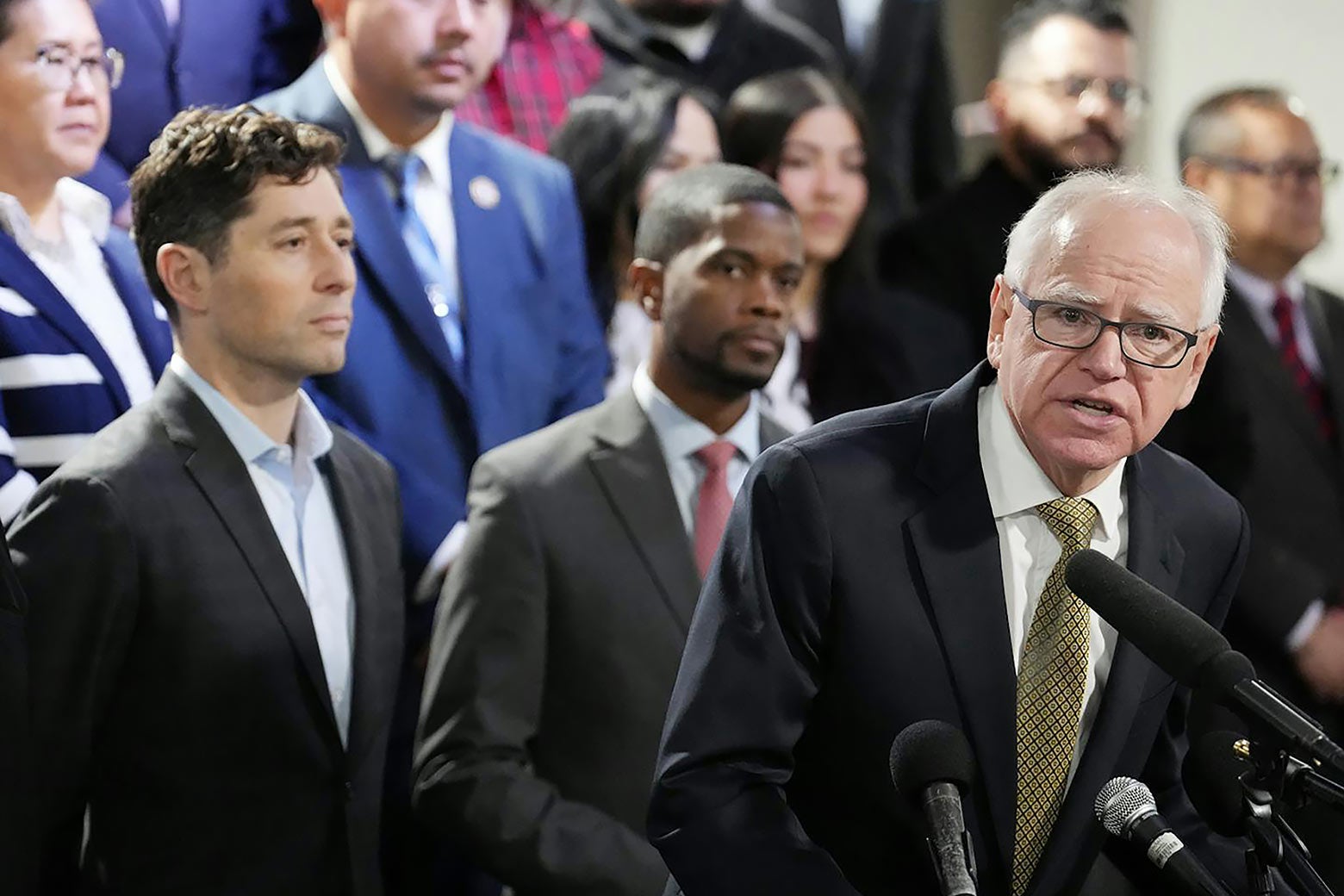
This week, the Department of Justice forged ahead with criminal investigations into Minnesota Gov. Tim Walz and Minneapolis Mayor Jacob Frey—just a few days after Minnesota filed suit against Homeland Security over its surge of federal agents in and around the Twin Cities. State Attorney General Keith Ellison and Hennepin County Attorney Mary Moriarty are also being roped in and face subpoenas. The federal government is considering whether to charge Minnesota officials with conspiracy to impede federal agents’ immigration enforcement duties, but the case is clearly doomed to the same failure that met President Donald Trump’s efforts to prosecute political adversaries New York Attorney General Letitia James and former FBI Director James Comey. While those cases fell on technicalities, the investigations of the Minneapolis officials look likely to topple on more straightforward grounds: An administration that postures as fierce defenders of First Amendment rights is targeting these officials purely for their speech. While this effort is destined to fail, it still has the power to inflict long-term damage.
“The government may not take action based on the viewpoint of the speaker. Period, full stop,” former U.S. Attorney and Deputy Assistant Attorney General Harry Litman explained to Slate. Litman hosts the Talking Feds podcast, and he explained that the DOJ appears to be going after Walz and Frey through a federal statute that makes it a crime for local officials to conspire to prevent, force, intimidate, or threaten an officer who is required to perform their duties.
In order to prove Walz and Frey conspired against federal agents, the DOJ is likely going to attempt to use their public comments against them. For instance, Walz called the deployment of federal agents in Minnesota “sensationalized operations” and also put out a public statement urging people to “speak out loudly, urgently, but also peacefully.” Frey, during a separate press conference, made national waves when he said, “To ICE: Get the fuck out of Minneapolis. We do not want you here.”
To almost anyone hearing those comments, Walz’s and Frey’s statements would not amount to a “conspiracy.” The obvious reality is that the Trump administration simply has beef with the public statements Walz and Frey have made and is trying to intimidate them and any other critics of ICE’s brutal—arguably murderous—recent tactics.
The issue for the DOJ in this case is that these statements don’t clear the bar of the federal statute it’s trying to invoke. “It has to be an agreement to use force, threat, or intimidation to impede federal officials,” Litman explained, and those threats have to produce imminent lawless action—known as the Brandenburg standard. Previous Supreme Court jurisprudence has confirmed this, with the court ruling that even speech where someone is calling for unlawful action is protected under the First Amendment, until and unless it actually results in a tangible crime. “The basic idea is that the First Amendment line is really robust and really extensive and it stops at the point, but only at the point, where some really bad shit is just about to go down because of your words,” Litman explained.
Another problematic element to the DOJ’s strategy is the fact that they have issued subpoenas to the state attorney general and the local prosecutor, both of whom have pledged to look into investigating Jonathan Ross, the ICE officer who shot and killed Renee Good. Litman said it’s highly irregular to subpoena a prosecutor, and particularly problematic in this instance when the federal statute the DOJ is using to investigate may not hold up to scrutiny in court. On top of that, grand jury rules dictate that prosecutors cannot just hand out subpoenas in order to dig around for new information or to harass someone; they must be in pursuit of a legitimate crime.
To Litman, the bottom line is that the president is clearly using the threat of criminal prosecution to further threaten our constitutional democracy. As he told me, the message to local officials across the country who are already experiencing federal agents in their cities and to those who may be next is: “If you argue with me politically, I’ll see your ass in court—and maybe in jail.”