Sign up for the Slatest to get the most insightful analysis, criticism, and advice out there, delivered to your inbox daily.
Since the first moment of the war, I have been thinking about when it will end—whether it will be in two days, or in a week, or perhaps much longer. I was following the news closely from the start, and soon after it began, they were talking about the complexities and difficulties of changing the situation. It wasn’t long before I entered a state of fear, one that often prevented me from hoping that the war would ever stop.
Since October 2023, we have lived through difficulties that cannot be described, but with each passing month, we would say that this might be the last month of the war—that we will start the next month in peace. Fifteen months passed, and every day I was waiting for that moment: the moment when they would announce the ceasefire. Each time I called my family and friends, everyone’s only wish was for it to happen. When I spoke to people during interviews and produced video stories and news articles, the only dream and wish expressed was for the war to stop and for everyone to return home.
My students also always talked about their hope for the war’s end, about their longing to return to their homes and schools. Many times, I felt that this wish was so simple, to live in peace and security, for the killing and destruction to stop—but how? When? Who would be able to stop this stubborn horror? All those months, the weight of these questions tired our minds. The question of when weighed on top of the extreme fatigue I felt from the successive crises of war: the lack of water and electricity, then the lack of food and endurance of famine, and then my injury last August during an Israeli airstrike. Facing death and surviving that incident, I didn’t want to lose hope.
Before the bombing, I used to speak regularly with an old classmate, and she would assure me the war would end: Every story has a beginning and an end, and the war has a near end, she would say. She had heart disease, a severe condition, and as a result she chose not to make the difficult journey from the north to the south. She chose to stay, and she wound up losing both her home and her place of work. She endured through the famine, and she escaped death several times. But in the end it was too much. The bombs did not kill her, not directly, but her heart couldn’t take it all. One day, it just stopped—and she didn’t make it. She didn’t survive to see this day. If she could hear me now, I would want her to know that she gave me hope, and that she was right.
Month after month I would walk through the streets, and the people around me would wonder: What happened in the negotiations? Did the two parties agree to stop the war? Did a powerful country intervene that could force them to end this? Month after month, I was pleading: Who will save these people from the war machine, from the bombing and killing that never stops? Whenever I took a taxi, the drivers and other passengers only ever talked about their memories from before the war and their hope to return to that life. Two million people in Gaza shared this wish.
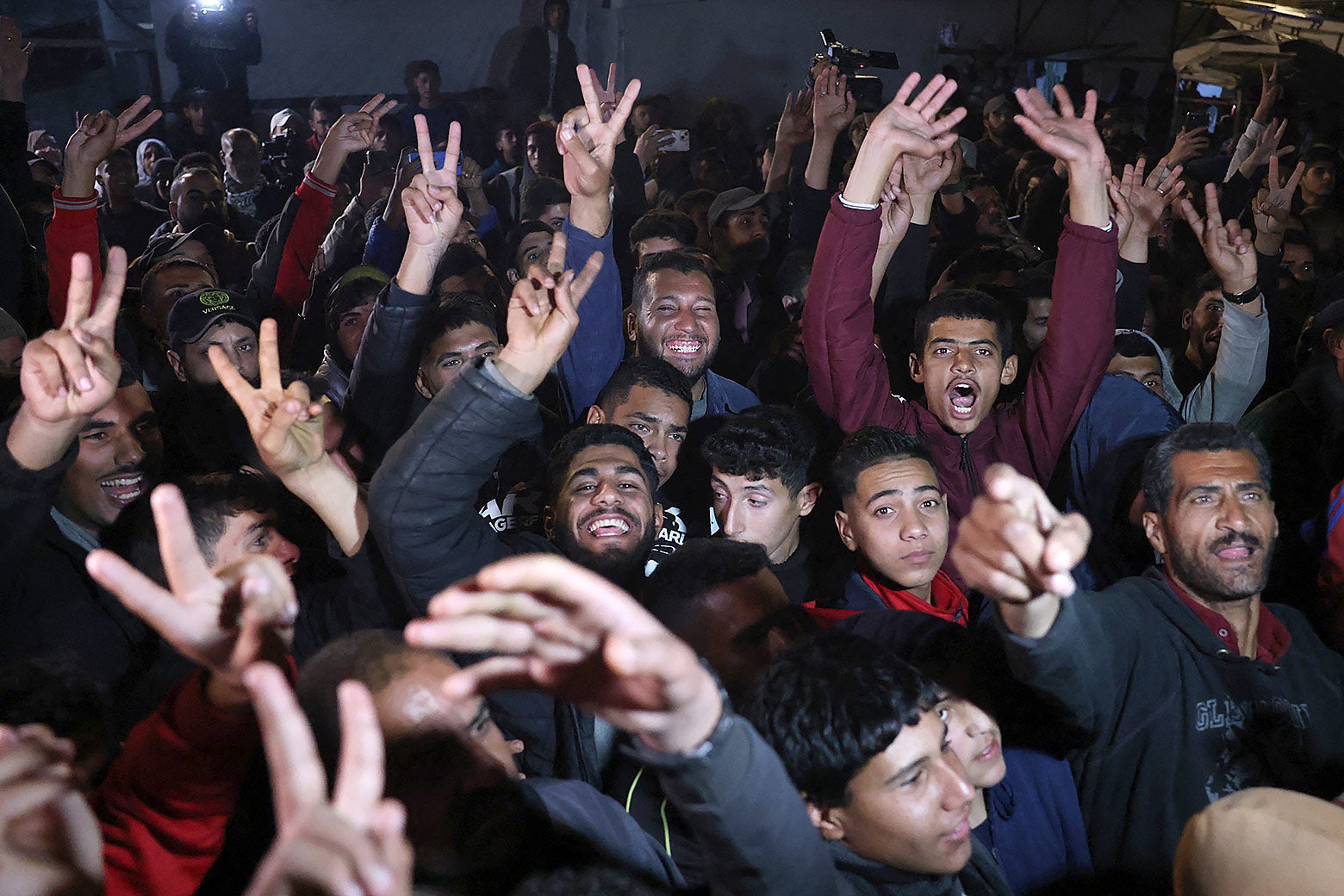
A week ago, President-elect Donald Trump repeated his statements about the need to reach a ceasefire before he takes office. That was when the negotiations began to intensify and become more serious. News spread throughout Gaza about the possibility of an agreement. During that week, I felt that there was hope, that this long suffering might finally end. I became more positive, and I tried to support my friends and colleagues around me: It’s coming. The war will end soon. Really. The displaced people in various areas of the southern Gaza Strip came out of their tents, shouting and chanting, demanding a ceasefire. This time, all the reports said that the seriousness of the negotiations was different.
On Wednesday evening, I could not believe the news: The negotiations had succeeded, the ceasefire would actually happen, and it would start on Sunday. A dam broke. My eyes filled with tears—from joy or sadness or fear, I do not know. My family was very happy. These have been 15 difficult and heavy months for everyone. Everyone I know supported this agreement. They lived through periods of despair and shorter periods of hope, again and again. We sat watching the celebrations of the displaced people. Then the neighbors and children came out chanting, clapping, and singing for freedom. All wanted the three days ahead to end so that Sunday would come and the war would stop. I wished the same: to close my eyes and wake up on Sunday, the war already over.
But it is not over yet. These past few days have been heavy. The bombing has not stopped. We do not want to lose anyone else in the final moments of the war. We have endured a lot together. We have endured a lot of pain and overcome many hardships. We want to survive together, to continue life and to know moments of freedom and safety. I called my friends and colleagues to hear their voices of joy. But everyone has a mix of feelings. Some are consumed with fear and anxiety about returning to the north and seeing that their homes have been destroyed.
My colleague Enas bought a house a few months before the war. I went to visit her in June of 2023, before it all began. I toured her house, and she was so happy with it, enthusing over its details. She moved from the difficult life of the Jabaliya camp to the most upscale residential area in Gaza City. But her joy with the new house was arrested. The war came, and it forced her to move farther north. She used to talk to me every day about when the war would stop. When they announced the ceasefire, she told me about how worried she was, wondering whether she would be able to see her beautiful house again, or if it will have become something else entirely. If it is damaged, what will I do with it? Would I rebuild it again, or would another war just come and destroy it? Still, she too is happy that the war is ending, that the awful sounds of bombing and warplanes of all kinds will stop.
Another colleague, Bayan, is also from the north, but her story is sadder. She was displaced to the south with her two daughters. During the war, she lost one of them, and now she will return home with only one. When I talked to her, I consoled her: The war was over, and finally, she would return home, her surviving daughter at her side. I found her very strong. The news made her happy. When she gets back to the north, she will meet her husband, whom she left there and has not seen for 15 months. And she will finally see me again. She says that she misses me and wants to hug me for the sake of freedom, and to celebrate the end of the war.
As for myself, I will take some time to rest. I need my mind to rest from constantly thinking about survival. I need my heart to rest from the intense fear of hearing any sudden sound. I have become more nervous, and I look for any quiet time I can find. I have been running away to sleep, to try to end the days of war for myself, despite waking up screaming at every sound of bombing. Now I can actually rest; I can move around without fear; I won’t have to be nervous when one of my family members leaves. We will try to rebuild our lives again. It will take a long time, but we will do it. My sister and her children are so happy that the war will stop. Rital, my 5-year-old nephew, asks if the bombing will really end, and if we will rebuild our house again. I want my room to be beautiful.
We still have these dreams, and we still have hope that the coming days will be better. I will return to my school in the north and meet my colleagues and students, and I will hug them a lot. We will cry a lot for those we have lost—students and colleagues from that beautiful school. We need peace and security, because we are a people who have not lived a moment in either, for more than just this war—for years. The successive wars have hurt us too much. We have lost too many loved ones, too many places, too many memories. Perhaps this will be the last war, at last.