Sign up for the Slatest to get the most insightful analysis, criticism, and advice out there, delivered to your inbox daily.
This April, I found myself biking alongside Tommy Battle, the mayor of Huntsville, Alabama. My previous knowledge of Battle was limited to the fact that in 2018 he had urged his city to spend $125,000 to defend a cop who shot a suicidal man within 11 seconds of entering the man’s home. Battle also tried to refuse to release the body-camera footage from the scene, even after the officer had been convicted of murder by a jury and sentenced to 25 years in prison. This hasn’t hurt Battle’s standing in the eyes of Huntsville voters, however. In 2024 he ran for his fifth term unopposed.
As a New Yorker who has been forced to defend the phrase Defund the Police to his Gen X parents and co-workers, I expected to have little in common with this guy. Most of the city cyclists I’ve met have been either frustratingly politically agnostic or hardcore leftist.
But there Battle was, gamely chatting with reporters like me about how proud he was of the 130 miles of existing greenways and trails located throughout the Huntsville area and the plans to build out nearly 250 miles more over the next few decades. He rides his e-bike through downtown Huntsville to work most days, and staffers told me he often leaves it in the hallway outside City Council meetings. Gotta hand it to him: That rules.
My brain was being slightly broken in Alabama courtesy of the Rails to Trails Conservancy, the nation’s largest trails, walking, and biking advocacy organization. The RTC has been a long-standing partner of organizations within Alabama seeking to build and improve their infrastructure, and it had invited a few journalists to Alabama to highlight the past, present, and future of trails in the state. I love biking so much that I write a newsletter about it. When an organization you admire offers to pay for your flights, lodging, and food so that you can spend a week on the bike, you say yes.
During my trip, we rode 50 miles from the Georgia border down to Anniston, Alabama, on the paved Chief Ladiga trail, which was recently extended. I got to rip up the chunky gravel Richard Martin trail through Elkmont, where locals served us chicken stew and banana pudding. We spent the final days in Huntsville and Birmingham, listening to each city’s transportation officials talk about expanding and connecting the trails residents and tourists can use to walk and bike through the city.
Honestly, we barely scratched the surface. Alabama is covered in over 2,000 miles of dedicated biking and walking trails. In June 2023, Gov. Kay Ivey signed a bill to create Sweet Trails Alabama, a comprehensive plan to further connect all of the state’s 67 counties via surface trails, waterways, and road routes. Since then, Alabama has allocated over $4 million to trails and was set to receive an estimated $93 million in federal funding for its statewide trail system, according to the RTC. That grant money was rescinded as part of Trump’s One Big Beautiful Bill Act—jeopardizing an important component of the state’s future. The bike trails aren’t, after all, just about bike trails.
Like many other Southern states, Alabama is gorgeous. Featuring the base of the Appalachian Mountains in its northeast and sandy beaches along its southern coast, it is the most biodiverse state east of the Mississippi River. (It is fourth nationally, behind the gargantuan swaths covered by California and Texas and the extremophile-friendly desert climate of Arizona.) Although many of Alabama’s old-growth forests have long been cut down and replaced with trees that grow on a timeline more suitable for its logging industry, its tree line is still lush and visually impressive. The landscape felt extremely similar to the one I grew up around in Kentucky.
Alabama is also extremely conservative. The state has voted for Donald Trump by a wide margin in the past three presidential elections. Republicans outnumber Democrats in its Legislature nearly 3 to 1. Until this January, the elected head of the Alabama Supreme Court was a man who invoked the Book of Genesis in a concurring opinion in 2024. Twenty years earlier, the Southern Poverty Law Center had called him out for ties to white supremacists.
This could, in part, explain why Alabama has one of the largest rates of brain drain in the nation. In 2023 a report compiled with data collected from the U.S. Census Bureau’s Current Population Survey revealed that seven of the 10 states with the greatest college-educated leave were traditionally red states. This trend can create financial issues for a state. On balance, college-educated folks earn more money than those with less education, and they therefore pay more taxes.
Part of the plan to keep them: trails. On July 16, 2020, Ivey, the governor, announced that she had established a statewide commission on entrepreneurship and innovation to “create a more resilient, inclusive and robust economy.” Its first product was a massive report by the Hoover Institution, a conservative think tank based out of Stanford University, called “Innovative Alabama,” which published in late 2021. The report is divided into six sections. Two are about education; others are about advanced manufacturing, tax policy, and broadband access—classic free-market think tank stuff.
“There were a lot of takeaways in terms of entrepreneurship and things of that nature,” recalled Alabama state Sen. Andrew Jones. But the thing that sent “shock waves” across the state was what was contained in the second chapter. Titled “If You Build It, They Will Come,” it makes the case that Alabama “needs to ramp up spending on its outdoor recreation infrastructure.”
Following the report, Ivey’s commission set up Innovate Alabama, a public-private partnership tasked with implementing some of these recommendations. Making the state a destination for outdoor recreation is one of the main ways the organization believes it can retain talented workers from the state and attract others to move there, said T.C. McLemore, executive director of Innovate Alabama’s Outdoor Recreation Programs. He wants the state to be like other regions that have invested in innovation and outdoor recreation in tandem: “Think of Bend, Oregon, Boulder, Colorado, western North Carolina.” To do this, he’s focused on trying to improve its reputation as a spot not just to hunt and fish but also to hike, bike, kayak, and climb. Imagine, if you will, Alabama as the kind of place where a New Yorker tired of cramped living space and too much concrete dreams of relocating. The trails are part of that vision.
Trails are extremely popular in Alabama. Brandi Horton, the RTC’s vice president of communications, told me that polling done in the state indicates that 98 percent of Alabama residents believe that trails are important, and that nationwide, 86 percent think tax dollars should be spent on maintaining and improving trails. Jones, who wrote the Sweet Trails Alabama legislation and remains heavily involved in the program, said he’s gotten little pushback from his constituents on the money the state has spent on trails thus far.
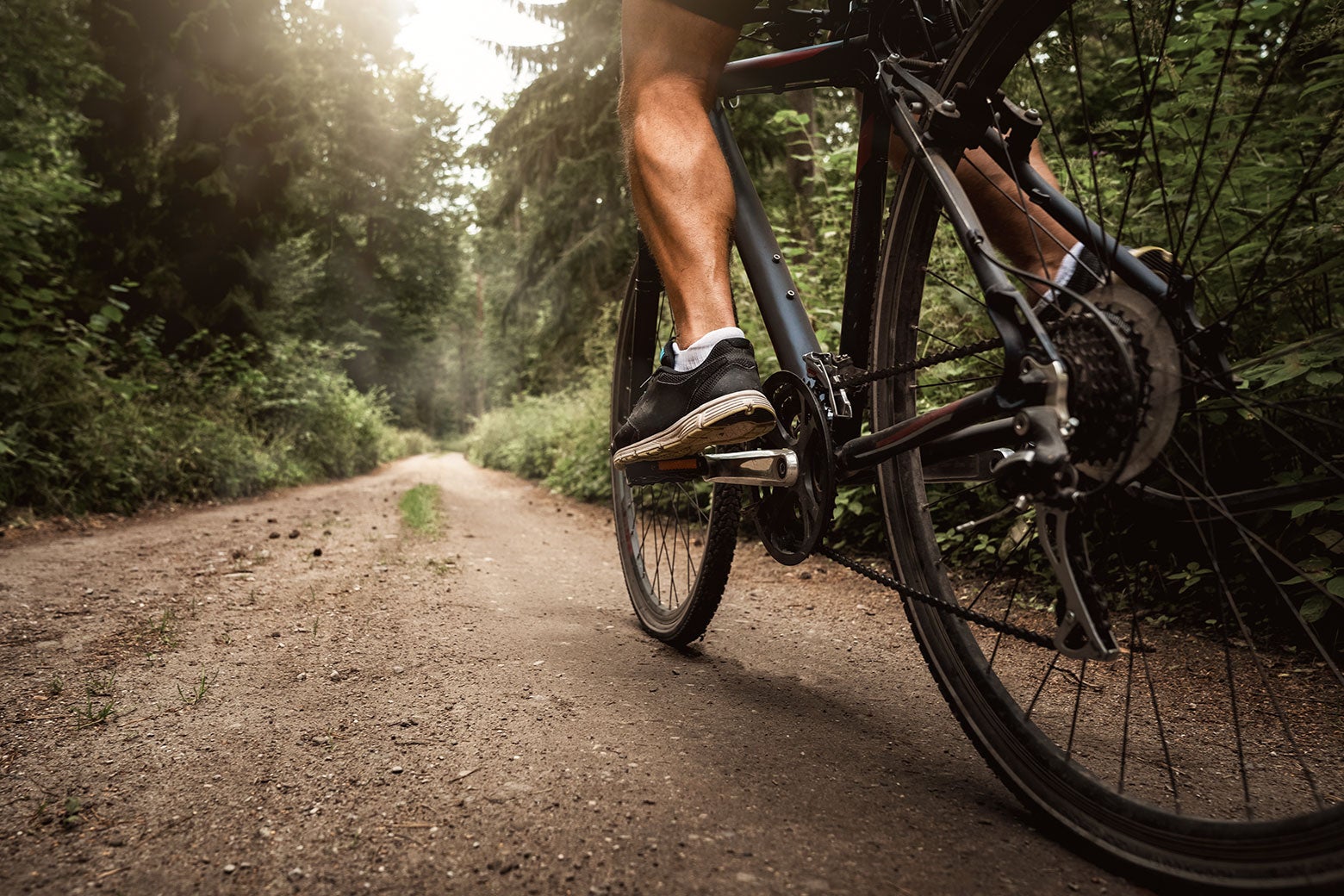
It makes sense to me: I saw tons of people using the trails during my week in Alabama. As we made our way along the buttery-smooth pavement of the recently extended Chief Ladiga trail, our group passed an older rider on a recumbent bicycle. In Birmingham, I rode in a massive peloton of local cyclists as we learned about its Red Rock Trail System plan, taking note of several brand-new protected bike paths and abundant signage. Best of all, halfway through our ride along Huntsville’s Aldridge Creek with Battle, the mayor, we were joined by two kids on tricycles, as well as their beleaguered mother—apparently, the kids were trying to convince her that they knew their stuff and wouldn’t need her help making their way back home from school.
Expanded trails would provide each of these folks more safe ways to travel by foot or wheel no matter where they’re headed. Instead of needing to hop in your car to go to the grocery store, or see a friend in another neighborhood, or visit a creek where you can fish, you would be able to get there with nothing more than the power you can supply with your feet. (No shame if you decide to ride an e-bike, of course.) Unfortunately, the man that many of the people I met in Alabama voted into office may well stop that plan in its tracks.
The Sweet Trails Alabama master plan makes it clear that federal funding will be needed to complete the massive undertaking. Given the Trump administration’s attitude toward public spending—bullish on fossil-fuel development and the harassment of brown people, bearish on everything else—it is unclear whether this money will come.
When I first spoke to Jones, the state senator, in May, he was already preparing himself for a world in which federal funding becomes scarce. “Everyone’s trying to figure out how to do more with less … but there’s always something we can do,” he said. Jones said he believed that the organization could find ways to help local trail builders get investments from the private sector, most likely in the form of branding and sponsorship opportunities.
Then, in July, Trump signed his budget bill. While it has been well documented that the legislation extends the president’s tax cuts from 2017, slashes money for Medicaid and the Supplemental Nutrition Assistance Program, and increases the funds for the military and Immigration and Customs Enforcement by billions, few have reported on the fact that it also rescinds billions in unobligated funding (money that Congress had made available in an earlier budget but not yet distributed) from the Neighborhood Access and Equity Grant Program. This sum was allocated for transportation projects intended to improve the connectivity of communities that had been harmed by previous transportation infrastructure like highways and roads that divided neighborhoods. Some of it was supposed to help make Alabama a better place to live, as well as a destination—to fund a vision for the state that is supported by Jones and Battle alike.
I got back in touch with Jones, who gave me a diplomatic, politician-y take on the funding situation: “While those of us in the trail community are disappointed to lose access to millions of dollars in federal funding, we are determined to keep moving forward,” he wrote to me in an email. Horton, of the RTC, put it in more plain terms: “It’s a travesty.”
I’m told the work to expand trails in Huntsville will be unaffected. “While the budget cuts are a big disappointment, the City of Huntsville funds its own trail and greenway development,” said Kelly Schrimsher, the city’s communications director. Similarly, Carolyn Buck, director of the Red Rock Trail System of the Freshwater Land Trust, told me that although the funding it was previously allocated by the Department of Transportation and the Department of Housing and Urban Development to construct 11.5 miles of urban trails in and around Birmingham is currently considered secure, a few projects that had been planned by the city government have been affected. In the meantime, Buck said, her organization is planning to lean on funding from Birmingham-based corporations, private foundations, and businesses, as well as the state Legislature.
I imagine this is what all Alabama trail advocates will have to do until the next presidential election—cobble together funds. Unless Trump all of a sudden decides to try gravel cycling, it seems unlikely he’ll task his DOT officials to do anything other than widen highways and whine about how afraid they are of the New York City subway.
It’s sad. Trails are a widely beloved form of infrastructure that demonstrably improve the physical and economic health of their communities. Many Americans, regardless of political affiliation, love them and think they are a great use of our country’s money. What’s more American than the open road, the wind in your hair, pedaling with your own two feet?